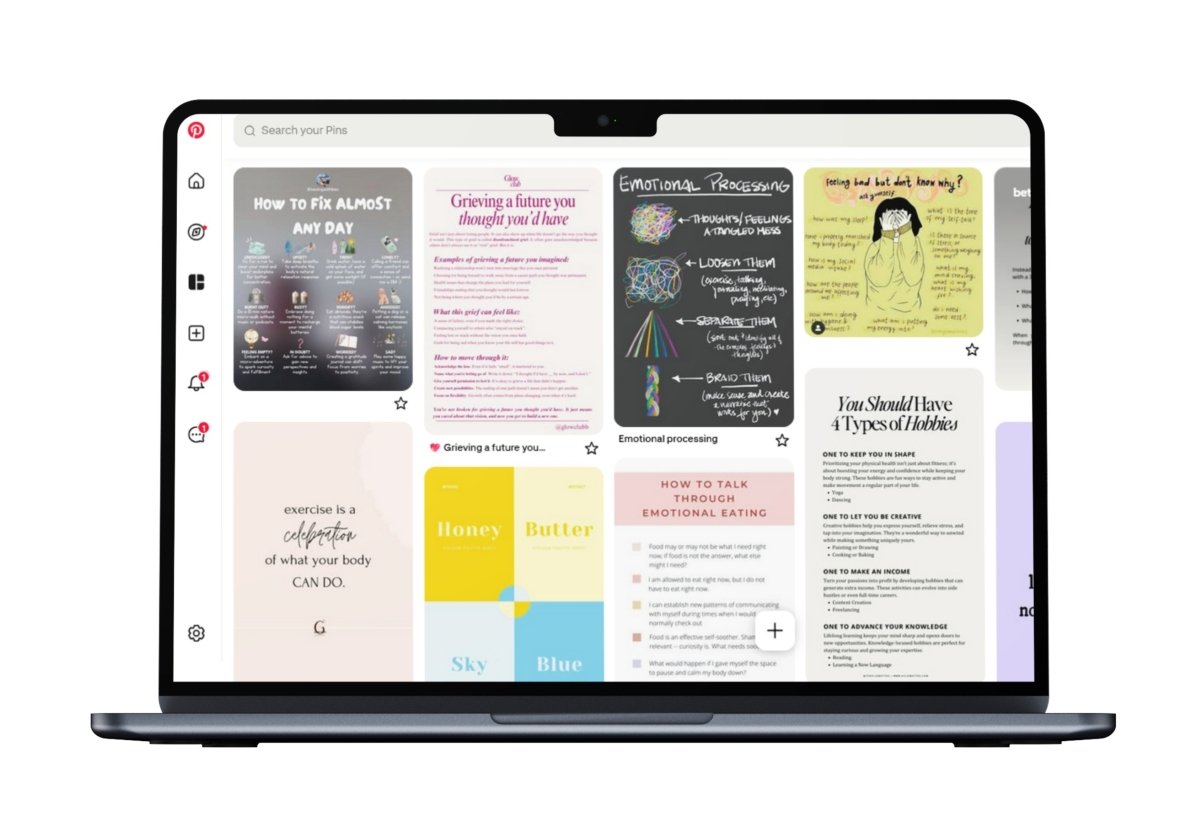
Pinterest is touted by many experts as the one platform where people get on with the intention to click off. This can lead people to make one of the most popular pin designs: Pins with lots of text overlay. While it’s true that Pinterest users are more inclined to leave the platform than users on other apps, I know from personal experience that users also sometimes just want to scroll; to be inspired or educated and not have to leave the platform immediately.
In this post, I want to talk about insights I’ve gleaned over the last two years about the types of pins you should be making more of. I’m not talking about pin format, but rather, the function, intent, and design of the pin.
What are zero-friction Pins?
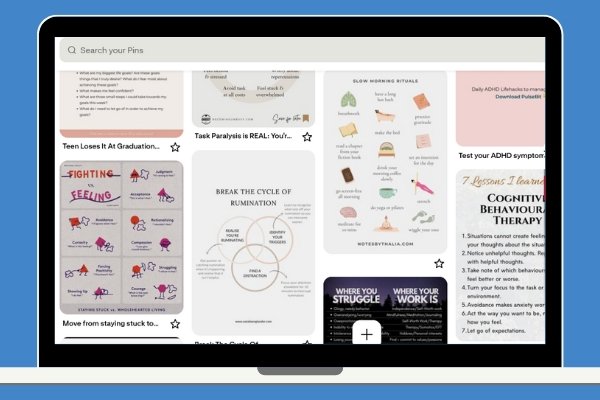
I defining ‘zero-friction’ pins as images designed to offer value to the user without them having to leave Pinterest. The natural question that follows is, “Why would I want to do that?”
Creating content can feel like a thankless job, and Pinterest is that one place where we can get traffic (which we might later monetize) as the reward for our hard work. While I’m not suggesting an overhaul of your strategy, I am suggesting that you include a few of these strategically. The trick here is to create engagement, which benefits us in a few key ways:
Increasing your followers:
Yes, yes, we’ve heard it all before, that followers don’t matter when it comes to Pinterest. And while a following is not necessary to get reach on Pinterest (that’s why we love it so much!), gaining more followers can be beneficial for your business as a whole. We are often told that Pinterest offers a “cold” audience. However, when someone chooses to follow you as a creator, it’s great for your brand. Since your content will then be served on their home feed, you get the chance to “warm” the user. It moves them from a user who encounters you randomly, to someone who recognizes your branding and content.
Brand opportunities:
I have seen, on two occasions, people asking how to gain more Pinterest followers because a brand asked for their numbers before agreeing to a partnership. These might be rare occurrences, but if you want to monetize through collaborations, that social proof is a good idea to have in your back pocket. The great thing is that this doesn’t need to be a herculean task; it can be part of your strategy by including more zero-friction pins.
Algorithm signals:
User engagement is a critical signal used by Pinterest and other online platforms to determine which content to show users.
Leif Sigerson & Wendy Matheny
Clicks and saves send a message to the algorithms that your content is worth showing to more people. Zero-friction pins may help boost these signals as you are essentially telling Pinterest that your account is high-quality and valuable, which helps all your content in the long run.
The 3 types of zero-friction pins you should be making
Before we look at the specific types of pins, it’s helpful to understand why they work. In my view, a user will save or engage with your pin if it does one of three things: it inspires, educates them or entertains them. Inspirational content shows a person what is possible, whereas educational content adds more tangible, immediate value to their day. Entertainment is a less thought-of function on Pinterest, but it is still worth exploring. You could, for example, share humoros tidbits about a specific group such as cat-lovers, or make a “This or That” spread on your pin, to give the user a reason to stop scrolling and engage.
With that in mind, here are the three styles of zero-friction pins you should try adding to your queue:
1. Inspirational pins
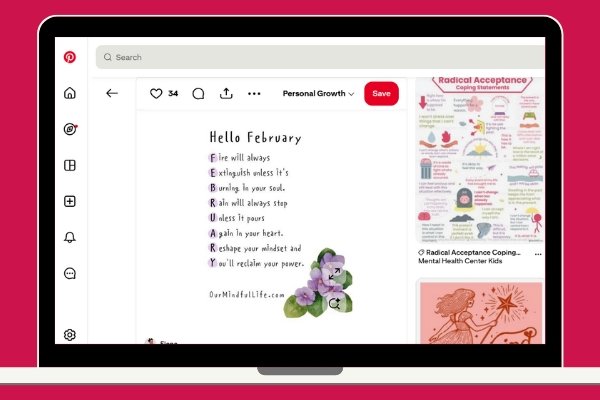
Inspirational pins could simply be beautiful images, but to make this accessible to all types of creators, I am going to go with quotes or any words that inspire or prompt one to thought such as journal prompts.
Quotes are a very popular query with a massive search volume. The phrase “Quotes about life” alone has a monthly search volume of about 1 million! But that’s a bit too broad to be useful. I recommend going with something like “Short inspirational life quotes,” which has about 5,000 monthly searches but a much more focused audience.
On this kind of pin, you write out one quote legibly and make it pretty. You can still encourage a click by starting your Pin title with “30 short inspirational quotes about life” and using a description like “Read the full list of short inspirational quotes…” (Check out my blog post about the importance of the first 60 characters to see how to word this perfectly). Bonus if you add your site name to the pin image. This way, you get the engagement on the platform, but the door is still open for them to visit your site.
2. Educational pins
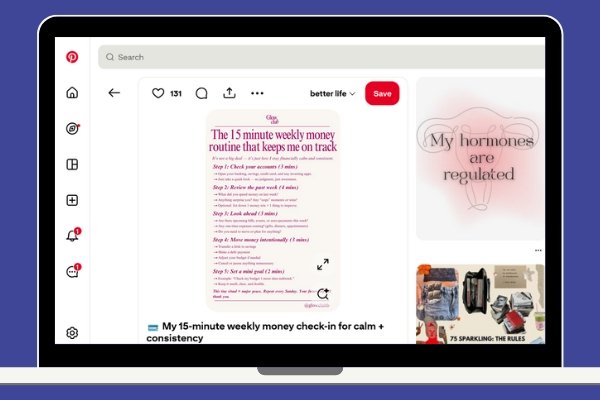
Tips. how-tos, checklists etc. are another popular category for boosting user engagement. These are perfect because you can list 3-5 items upfront and encourage the user to engage further by adding a ‘Read more’ button on the pin image. Doing this offers value upfront but can also encourage outbound clicks. As usual, try to encourage the reader to go further than saving the pin by writing an action driven pin description.
Get creative with flowcharts, checklists, or reminder style pins. I have followed creators on Pinterest just because one single pin was so helpful I thought I’d be interested in their other stuff.
A great example of this is the creator The Glow Clubb, who I follow on Pinterest. Despite not having a massive library of thousands of pins, they have over 9,000,000 monthly views. Their secret is creating exactly this kind of high-value, zero-friction educational content that people can’t help but save. If you find one of these pins is gaining major traction, you can always experiment with tagging relevant products later on.
3. Entertaining pins
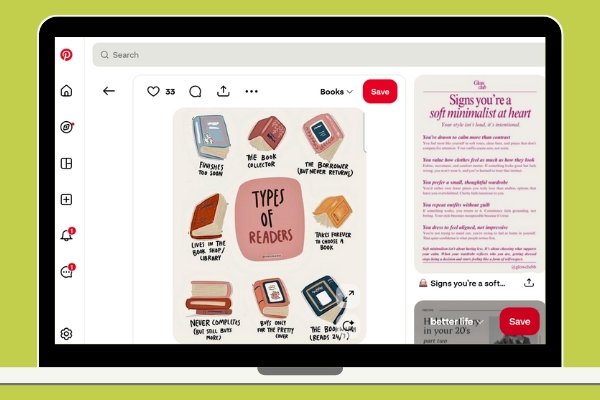
Believe it or not, you can create pins that are just there to offer a bit of entertainment. One of the best ways to do this is to create interactive games like This or That, Would You Rather, Signs you are … etc.
These pins are just for fun and giggles, but they are great for variety. If your niche deals with a group of people with a very strong identity, say MBTI types and quilters, you can create pins that share some humor or irony about that group. For example, an ‘ENTP girlfriend starter pack‘ is a perfect way to make your audience feel seen. These are identity pins that people save simply because it feels like it was made just for them.
Zero-Friction doesn’t have to mean no outbound clicks
Designing pins for engagement does not have to be platform-exclusive. You can still get outbound clicks to your site if you put a little extra effort into your titles and descriptions once you have earned that initial engagement.
Pinterest is a content-hungry platform, and these types of pins help you create dozens of fresh pins that boost your overall reach. Quotes are simple to gather, educational pins can be snippets from your long-form content, and entertainment pins can be the random things about your niche that only your people will understand.
So give these Zero-Friction pins a try and check in a few months to see how they’re doing.
Until next time, Happy pinning!