If you’ve spent any time looking into Pinterest strategy, you’ve probably heard about the importance of consistency. And, as much as I understand why that advice is given, I’m here to tell you that I, too, fell off the wagon. And now, I’m stuck in what I’m calling “Pinterest Impression Jail,” with one of my accounts hovering around a very sad 2,000 monthly impressions.
It’s a story I think many of us can relate to. So, let me tell you how I ended up here, what I’ve been learning, and what I’m doing to try and break free.
The Rise and Fall: My Product Pin Strategy
I decided to get serious about one of my Pinterest accounts around September/October 2024, by pinning every single day. My main goal was to drive traffic to my Ko-fi shop and hopefuly make some sales on low cost printables. Within two months or so I started to see amazing growth. Note that this was a pre-existing account (7 months or so).
By January, things really picked up. I hit around 150,000 monthly impressions, and I actually made sales! Granted, these were for $3 digital printables, mostly calendars, but still, getting direct product sales from Pinterest felt like a dream to me. I was only pinning directly to paid products and freebies (which got tons of downloads by the way).
When March rolled around, my impressions and engagement took a nosedive. It’s not hard to say why, really, most of my content was printable calendars, which fall into the category of seasonal content. It’s only natural that once January and February passed, people weren’t as interested as they were before.
Looking back, I didn’t have a tight enough strategy for evergreen content on that account.
Why I abandoned my Pinterest account
While I had made some sales directly from my product pins, this account did start to feel like a distraction and the traffic felt volatile. Meanwhile, my other Pinterest account, which was connected to a blog of mine was growing more consistently.
I’ve come to think that blogs just perform better on Pinterest. With digital products, you might see impressions, but outbound clicks and saves can be much lower, unless the user has high buying intent. Blog posts, on the other hand, offer free value, which people are far more likely to save and click on.
So, I made a decision to step away the product-based Pinterest account and put all my energy into my other blog-focused account in the DIY niche. This effort really paid off for my blog.
The penalty of ghosting your Pinterest Account
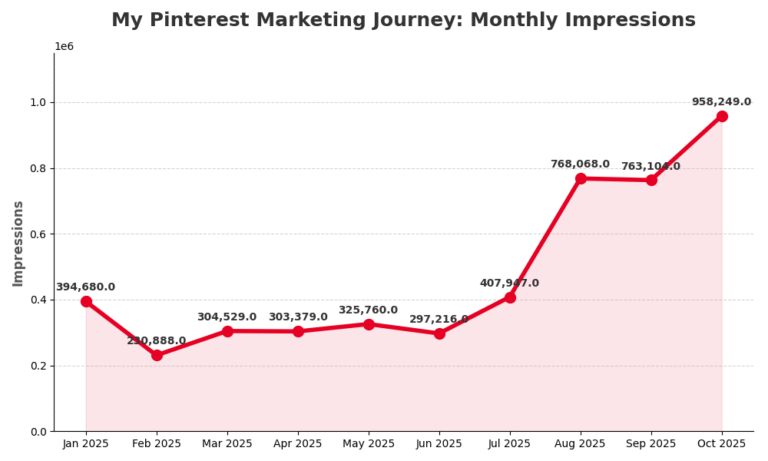
What happens when you completely step away from a Pinterest account? From my experience at least, its stats plummet. My impressions went from 150,000 to less than 2,000 over the period of say 6 months.
In efforts to revive my account, I changed my Pinterest strategy slightly by creating my own website with blog posts that act as landing pages for Pinterest. Now I pin to articles that might round up several of my digital products, link to freebies to build my email list and feature helpful affiliate digital products.
My hope was to replicate the success I saw with my other blog account, knowing that pinning to a landing page offers more limited reach than pinning straight to a product shop. Though it’s a stronger, more sustainable approach, it has been an uphill battle. I’ve been consistently pinning for about two months now, my views only fluctuate by a disheartening 100 here or there. For the longest time I was stuck in 2000 views jail but as of today I have hit the 3000 monthly impressions mark.
It’s only been about a month of consistent pinning on that account again, so I know I need to give it time. If there’s one thing I’ve learned to be true about Pinterest, it’s that it’s a long game.
Hard lessons I’ve learnt after abandoning my Pinterest account
Based on my journey from 150K to 2K impressions, here are my top three takeaways, and things I’m trying to keep in mind moving forward:
1. Don’t go completely ghost on Pinterest
If you can help it, try not to completely abandon an account unless you’re truly done with it forever. Even if it means reducing your pinning frequency to just one good pin a week, that’s better than nothing.
Spend 10 minutes creating one well-designed pin with optimized keywords, title, and description. That consistent signal, I believe, is far better than going completely ghost. It’s much harder (and slower) to try and revive an account once it’s been ghosted. Trust me.
2. The destination of your pin matters immensely
- Product Pins: These often require high buying intent for them to be worth your while. So many people might save product pins for inspiration but won’t go further unless they really want to buy your item.
- Blog Post Pins: These offer free value, be it entertainment, advice or knowledge. From what I’ve seen, people are far more likely to save these, click through to read. In my experience these types of pins have more longevity.
3. Understanding Your Niche and Pin Destination
- What is your niche? Is it highly seasonal like my calendars were?
- Where are your pins going? Is it a third-party site like Etsy (where the attribution often goes more to Etsy than your brand)? Or is it your own owned domain, which you can claim on Pinterest for maximum benefit?
- What value does your pin offer? Is it free content, or does it require a purchase? From my experience, the lower the barrier to entry (i.e., free value), the higher the potential for engagement and distribution.
The long road back to a healthy account
So, here I am, actively trying to dig myself out of Pinterest Impression Jail with my second account. I’m focusing on creating free printables and promoting my paid products and affiliate offers within the freebie blog posts for that site. It’s slow going, but I know that I just have to be persistent.
But now, I face another hurdle, Pinterest has removed the ‘visit site’ button from so many pins. I might write about this later. For now, I’m staying consistent with my Pinterest strategy as they resolve what seems to be a glitch in the system.
Till next time!
Have you ever experienced a similar “Pinterest Jail”? Share your story in the comments!