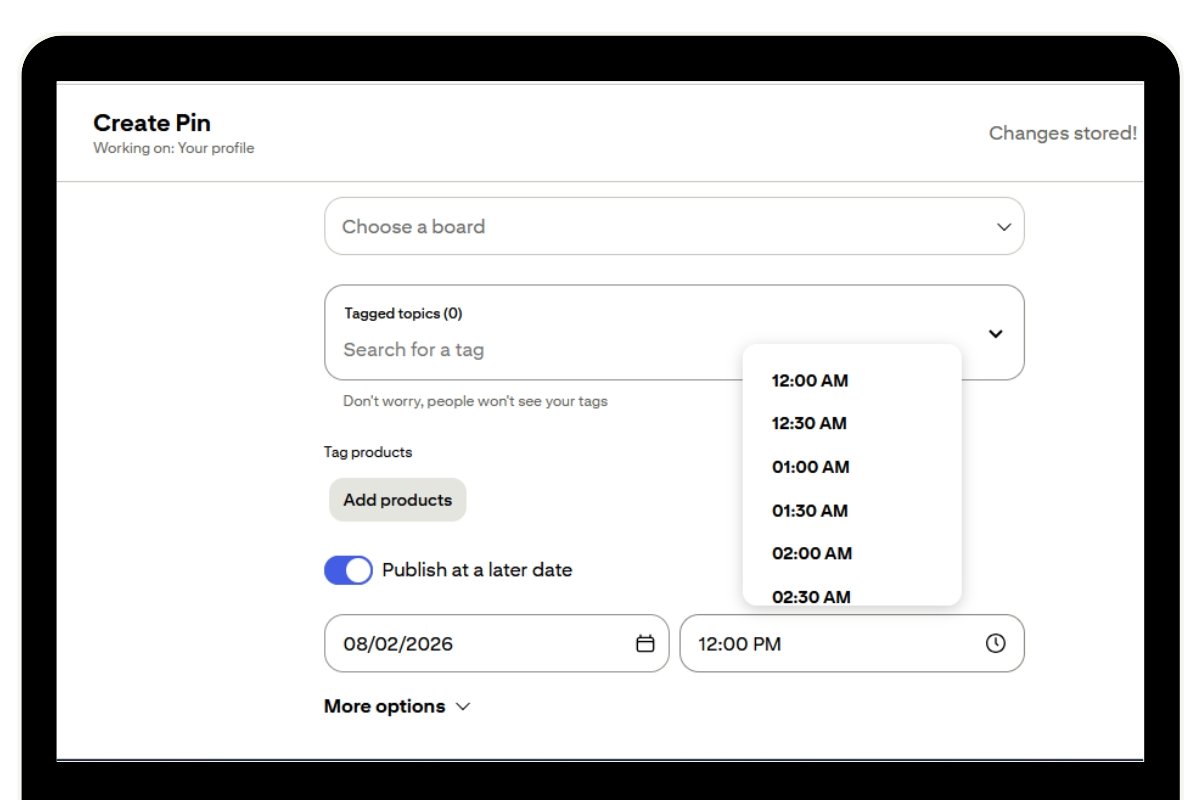
Since Pinterest is frequently described as a search and discovery platform, I have never bothered to optimize my strategy by pinning at a specific time, despite seeing this tip in two Pinterest courses I have purchased. In my mind, since Pinterest takes time to index pins, it surely shouldn’t matter whether one pins when one’s audience is asleep or mostly active.
As I’ve taken the time to educate myself about how Pinterest actually works, I have had to ask myself: Is there a case for optimal time pinning, and should I adopt this tactic?
Pinterest’s old chronological feed
Before 2014, Pinterest’s home feed was ‘time-ordered’, that is, pins on the newsfeed were sorted from first to last, in order of publication. Enter the smart feed, in which pins are surfaced based on a combination of criteria. Here pins are assigned a score that reflects the pin quality and relevance before they are added to a feed queue for later distribution.
With this shift, the time a pin was published was deprioritized and was no longer a primary ranking signal.The only time chronology was brought back was when Pinterest introduced the ‘Following’ tab, where pins by the people you follow were chronologically arranged. This feature, however, soon disappeared.
So we can see that at one time, it was probably important to know when pinners were most active on Pinterest, so you could get their eyes on your pins and boost your engagement. But since the introduction of the smart feed, I just don’t see why the time you pin would factor into anything. So, why has this folklore been carried through the years?
Does optimal time pinning really lead to stronger engagement signals?
The argument behind optimal time pinning typically follows this logic:
If you pin when more users are active, you increase your chances of engagement. Engagement is a positive signal to Pinterest, and stronger early engagement helps your pin get distributed more widely.
Let’s think through this. In my previous blog post about zero friction pins and how they boost your engagement, I quoted this tidbit from the Pinterest engineering blog about engagement signals:
User engagement is a critical signal used by Pinterest and other online platforms to determine which content to show users.
Leif Sigerson & Wendy Matheny
This has been mentioned time and again by Pinterest themselves, that they do use engagement signals to decide what content to show on users’ homefeeds. But there has been no mention by Pinterest, as far as I have been able to research, about early engagement playing a critical role in the success of pins.
The necessary time constraint
If posting time matters at all, it can only matter during the period when publishing time creates different exposure conditions. Once the next day rolls around, the same (or similar) optimal times occur, and at that point, we’re no longer talking about a timing advantage
In my mind, any effect of optimal time pinning surely must occur within a narrow window after publishing. And if we are being generous, we could make that time period to be 24 hours after a pin is published.
Pinterest would then need to get a meaningful engagement signal during this window which impacts how the pin is distributed
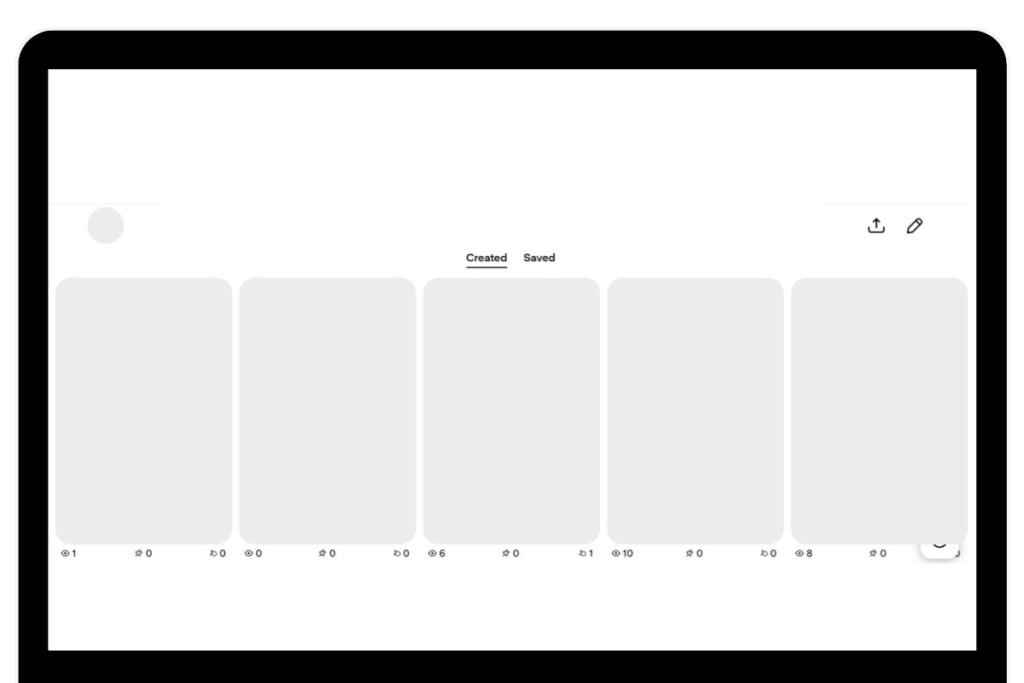
In my own experience and in one particular email I’ve got from a reputable Pinterest expert, the first 24 hours after publishing a pin are quite quiet. You may get a few impressions and maybe a click, but I have rarely ever seen a save.
This is visible directly in Pinterest’s Created tab. It’s not unusual for a pin to sit with minimal activity for days before anything meaningful happens.
So what early engagement signal are people actually talking about when they mention the advantage of pinning during peak traffic hours?
If the signal is based on one click versus zero clicks, or ten impressions versus twenty, I find it hard to believe that a sophisticated recommendation system would treat this as decisive information.

The problem with optimal time experiments
Another reason why I find it hard to buy into optimal time pinning is that the ‘experiments’ done aren’t very scientifically sound. Even with large sample sizes, how can one say conclusively that pins do ‘well’ when pinned at a certain time when the pins are different, saved to different boards, target different user intents and are shown to different subsets of users.
Without a true control it’s impossible to isolate posting time as the cause of the success of a pin. Furthermore, what does ‘performing well’ mean? Did these pins perform significantly better than others?
Could early engagement matter later?
So if we take the most charitable interpretation of the optimal pinning claim, we’d say that early engagement increases the likelihood of future distribution of a pin, when it later matches user search intent.
If this were true and Pinterest were using early engagement intelligently (as the name smart feed suggests), the signal would almost certainly be relative and not absolute, meaning two engagements out of 10 impressions and 4 engagements out of 20, would essentially be the same signal.

I think we sometimes over-optimize our pins
As it gets increasingly difficult to get traffic to our sites, I think we resort to various tactics so as to boost our engagement and visibility online. For Pinterest, one the ways we do this is through optimal pinning. Tailwind, arguably the most popular third party Pinterest scheduling tool has the optimal publishing times accurate down to the minute. If you’re using a scheduler that makes it easy for you to pin at the ‘best time’, then I suppose doing all this is at worst harmless. But if you plan and schedule your pins by yourself, using the native scheduler, then trying to find the best time to pin to me really sounds like waste of time.
Where I land with optimal time pinning
After thinking this matter through, I see no convincing case that timing matters enough to justify meticulous optimization, especially when compared to factors like keyword optimization and visual clarity.
If early engagement plays any role at all, it appears to be minor and is probably easily overwhelmed by more important signals. Obsessing over posting time feels like over-engineering a system that’s already been designed to be robust.
So … sound off in the comments. I would love to know your opinion about this topic. Until next time, happy pinning!